
COMPUTATIONAL THINKING
This week we will be addressing the importance of computational thinking and how it enhances creativity within the classroom.
What is Computational Thinking?
Wing ,(2006) states that computational thinking is a computer science skill which is crucial to student’s learning and their analytical abilities. It is having the ability to design, problem solve and develop understandings of human behaviour through an abstract point of view (Wing, 2006). Wing, (2006) claims that these skillsets are universal and can be greatly beneficial as it is widely applicable to the future of children and students.
How do we teach computational thinking?
One great example of teaching students is through Blockly Games: Maze which teaches the basics of programing without the traditional lines of coding required (Blockly Games, 2020). Blockly games, (2020), introduces the player to simple tasks at first but after grasping the basics will introduce new tools to incorporate into the block coding to solve the puzzles presented in each level.
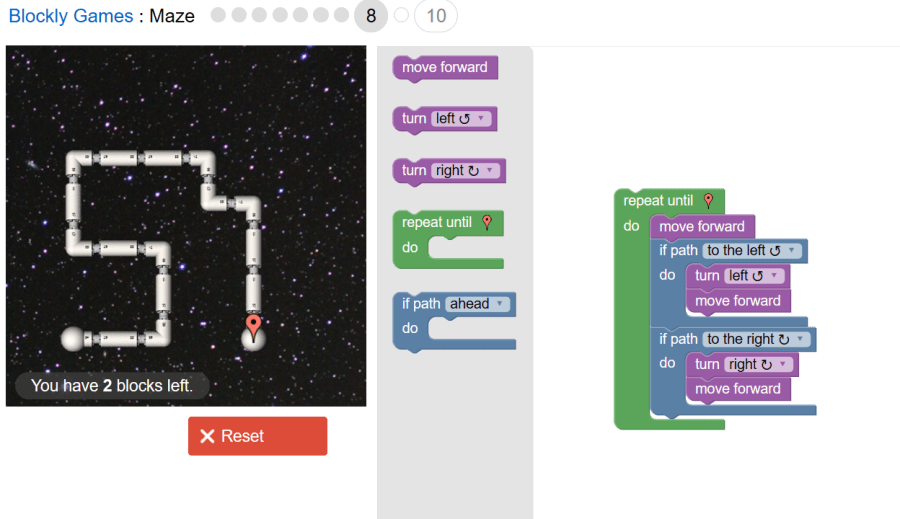
This coincides with the curriculum goals introduced by Computing at School, (2013) as they encourage learning and developing these skillsets at school. Computing at School, (2013), encourages students to understand what algorithms are; how they are developed and implemented on digital devices; and how programs like blocky games will take the code produced and execute the commands it is given. Then the next step is for the students to be able to design, create, fix programs that could execute commands or instructions in the physical or digital world and problem solve by deconstructing the issue into smaller parts (Computing at School, 2013). Blockly Games: Maze as shown above teaches these exact skills through the simple instructions and understanding first then moving toward application and abstract thinking as levels become more difficult (Blockly Games, 2020).
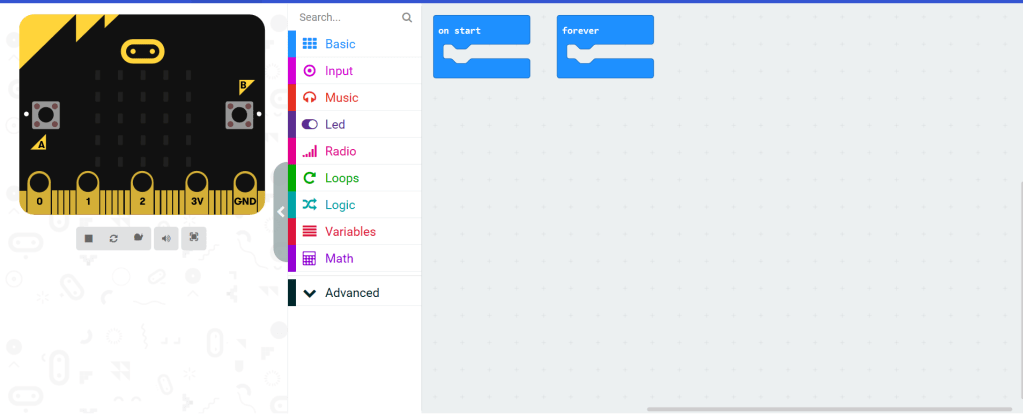
Furthermore these computational thinking skills can be developed through the use of micro-bits which are cheap and affordable minicomputers that teach problem solving and abstract thinking through programing and ICT (Micro:bit, 2020).
Challenges of Computational thinking
The main challenge with this implementation is that, as teachers and students, we are not thought how to implement these activities with technology in a meaningful and effective way. However Computing at School, (2013), Wing, (2006) have provided the insight and strategies on how to approach teaching these skillsets by providing us with an understanding of its importance.
Reference List
Blockly Games. (2020). Maze. Retrieved from https://blockly.games/maze?lang=en
Computing at School (2013). Computing in the National Curriculum – A guide for Primary teachers. Retrieved from: http://www.computingatschool.org.uk/data/uploads/CASPrimaryComputing.pdf
Micro:bit. (2020). Retrieved from: https://microbit.org/
Wing, J. M. (2006). Computational Thinking. Communications of the ACM, 49(3), 33-35.
 EDUC3620 Digital Creativity and Learning
Computational thinking is most definitely beneficial for students and I agree that teaching computational thinking through games such as Blockly is great. Blockly and other games are also useful as they familiarise students with the idea of computational thinking and coding and scale the difficulty with each level. Micro:bits are great and I think that you could have expanded on their usability to show just how useful they are for teaching purposes.
LikeLike
I agree, computational thinking is an entire way of problem-solving that is extremely important for 21st Century students. There are definitely challenges to implementing computational thinking in an way that is authentic and meaningful for our students. Blockly is great accessible resource with clear scaffolding to trigger elements of computational thinking before students transition into more challenging coding programs, within robotics or vr for example. Nice post!
LikeLike
Relating computational thinking with computer programming is definitely a good choice. Students can practice so much skills such as decompose problems, recognising patterns, algorithms, abstract thinking, etc. Blockly has lots of good elements as what you described, it is a good tool to introduce programming for inexperience learner, from easier level to more challenging level. And it is good that you provided the challenge of the technology. Overall, a very good blog.
LikeLike
I think the best thing about computational thinking is the transfer-ability to computer programming. While the two are not exactly the same thing, the ability to use computational thinking is of great benefit to de-bugging code. It is often necessary to step through lines of code, visualising each action to determine what went wrong! The whole process can be of great benefit in all areas of learning as well! Great post!
LikeLike