
Emerging Technology: Augmented reality (AR)
Image above retrieved from: https://www.businessinsider.com.au/5g-help-retailers-shopping-augmented-reality-2019-8?r=US&IR=T
Augmented reality applications in the classroom
Augmented reality (AR) is an emerging technology that can bring immersive experiences and new possibilities of learning to a classroom (Wu, Lee, Chang and Liang, 2013). This blog will introduce what augmented reality (AR) is and how it can be used in the classroom for enhanced learning experiences and creativity fostering.
What is AR?
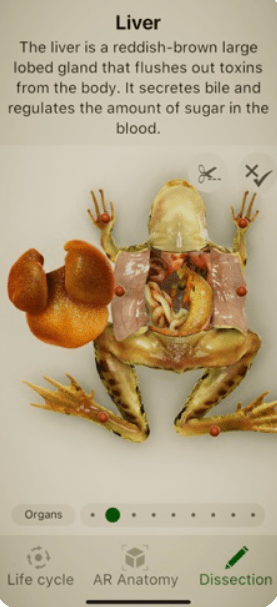
Augmented reality (AR) is a form of visual enhancement to the real world by blending virtual information with the physical parts of the world. Torres and Statti, (2018) describe it as tool that can impact the way the natural world is perceived and can provide meaningful enrichment to learning experiences in the classroom. It can provide an immersive experience for students and foster motivation toward achieving and creating their own work (Torres & Statti, 2018).
Fostering Creativity with AR
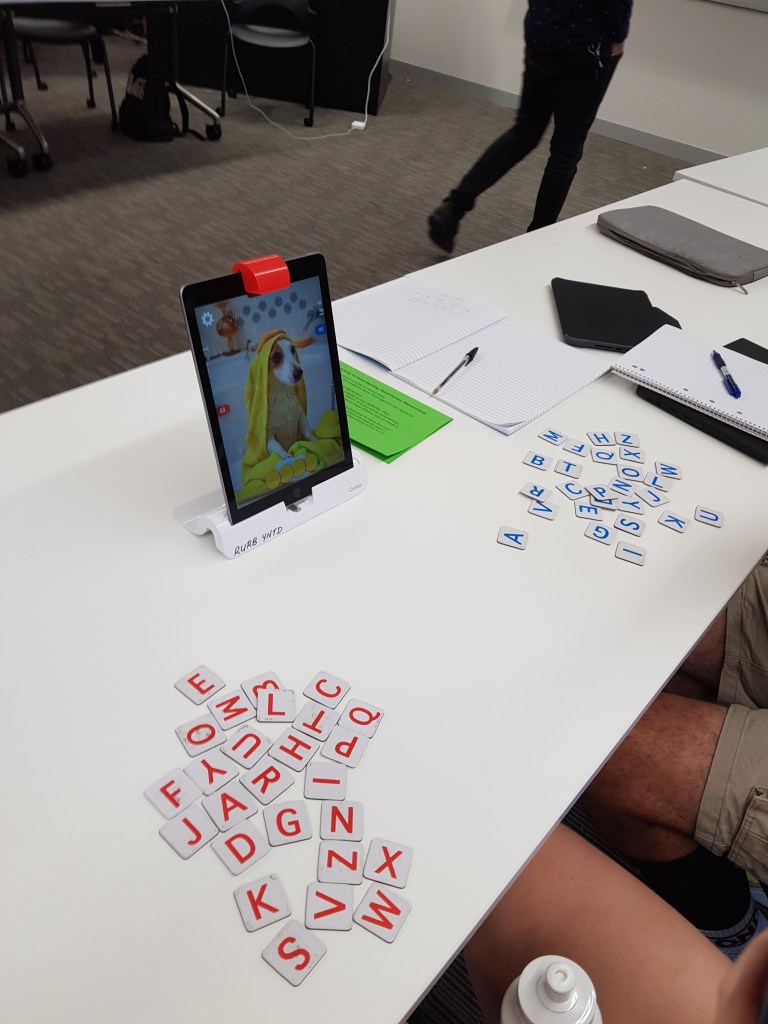
Augmented reality can not only enhance the experience of our learners but effective use of it can also help foster creativity. Wheeler, Waite and Bromfield, (2002) convey the idea that creativity can be fostered with ICT by enabling them to think and problem solve outside of conventional ways. To achieve this students are to be provided with a balance of structure and unstructured activities to allow for some direction whilst also allowing independent thinking (Wheeler et al., 2002). For the example shown in the image students are able to upload their own images to the application OSMO, (2020) and play the game by matching words to what the image represents. Students are given instructions however they can be creative with their images and answers that they would want to provide. The images can also represent abstract ideas which can help students visualise concepts that they otherwise may be not too familiar with (Torress & Statti, 2018).
Challenges of AR
With new technologies emerging in the 21st century, they can bring many benefits to teaching and learning however there are still challenges that need to be addressed with utilising technology such as AR. Toress and Statti, (2018) claims the main challenges for Augmented reality is the accessibility of these tools as teachers need to be aware of students with disability when incorporating these technologies in the classroom and design a task that is inclusive. Other issues also include how teachers are to approach this technology and effectively implement them into the classroom (Wu et al., 2013). Some teachers are also resistant to the idea of incorporating this into their framework and students also require the skills and competencies needed to participate in the cognitive overloading ICT related tasks (Wu et al., 2013).
However even with the challenges the technology of AR is still developing and many agree that the potential for enhancement of learning is there to harness (Wu et al., 2013).
Reference List
OSMO (2020). Transforming how children learn. Retrieved from: https://www.playosmo.com/en/
Reyes Ruiz, G., & Hernandez Hernandez, Marisol. (2018). Augmented reality for enhanced learning environments / Gerardo Reyes Ruiz and Marisol Hernandez Hernandez.
Torres, K., & Statti, A. (2018). Enhancing Learning and Professional Development Outcomes Through Augmented Reality. In Augmented Reality for Enhanced Learning Environments (pp. 58-72).
Wu, H., Lee, S., Chang, H., & Liang, J. (2013). Current status, opportunities and challenges of augmented reality in education. Computers & Education, 62(C), 41-49.









 EDUC3620 Digital Creativity and Learning